
What Does the Evidence Actually Say About Mold and Health?
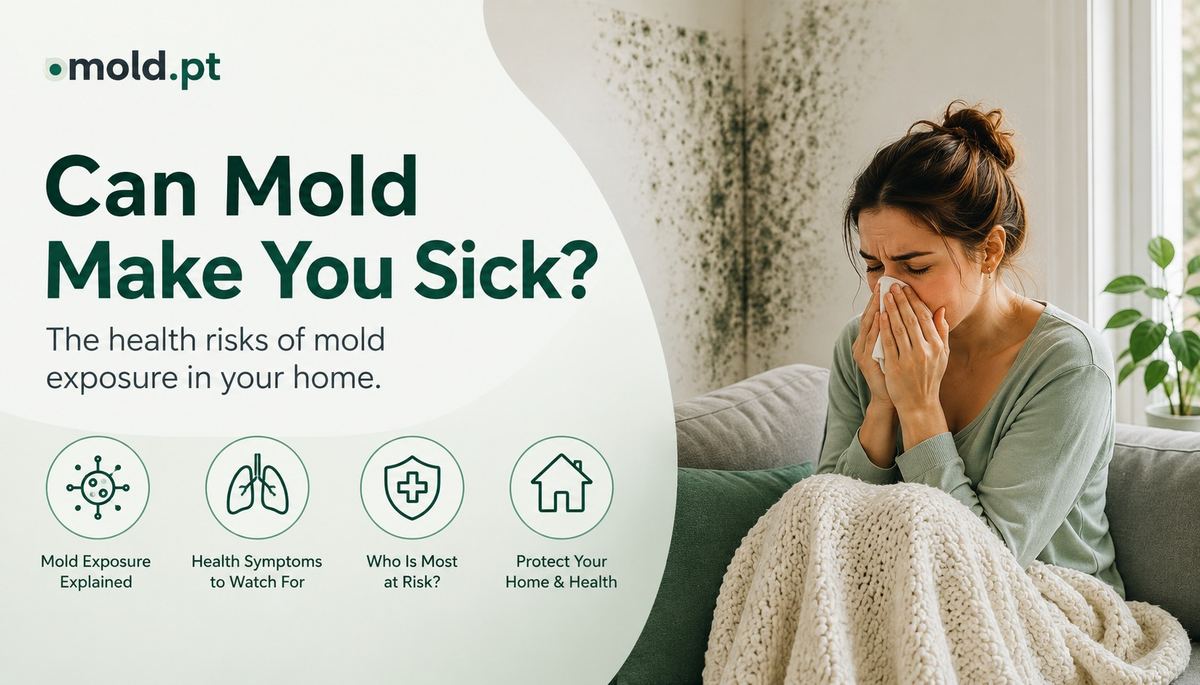
This is the question worth answering carefully, because the honest answer sits between two extremes people search for. Mold is not established as a direct cause of a specific diagnosed illness in an individual case, and mold.pt does not make that claim. At the same time, it isn't nothing:
The groups DGS itself identifies as more affected by poor indoor air quality generally are people with chronic respiratory disease, cardiovascular disease, allergies, children, and the elderly. This is a statement about population-level risk groups, not a diagnosis about any individual reader or their household. The World Health Organization's guidelines on dampness and mould reach the same conclusion internationally: persistent indoor dampness and mould growth are associated with increased respiratory symptoms, allergic reactions, and asthma, and the most effective protection is preventing dampness in the first place, not treating symptoms after the fact.
Why Do Symptoms Often Appear or Worsen in Winter?
Property owners, expats in particular, commonly report a seasonal pattern: a cough, congestion, or headache frequency that increases from autumn through winter and eases in spring and summer. Several factors plausibly explain this pattern together, not any single one in isolation:
- Indoor relative humidity tends to run higher in winter, closer to and above the 65% threshold associated with mold growth conditions
- Windows stay closed more often for warmth, reducing natural air exchange
- More total hours are spent indoors during colder, wetter months
- Heating can create localised warm-to-cold surface gradients that increase condensation at thermal bridging points
None of this confirms mold as the specific cause of a given symptom, it explains why the conditions mold favours and the conditions linked to general indoor air quality complaints both increase at the same time of year.
Symptom Checklist: When Is It Worth Investigating?
This checklist is a starting point for deciding whether investigation is worthwhile, it is not a diagnostic tool, and it doesn't replace a doctor's assessment.
- Cough, congestion, or throat irritation that improves away from the property and returns within days of coming back
- Symptoms tracking seasonally with rooms feeling more humid or showing condensation
- A musty smell in a specific room without an obvious other source
- Visible mold or persistent damp staining in the same property
- Worsening of an already-diagnosed respiratory or allergic condition, otherwise unexplained
- A single headache, cough, or fatigue episode without a pattern
- Symptoms present regardless of location, time of year, or which rooms are occupied
The pattern across time and location is what makes the checklist useful, a symptom in isolation doesn't point specifically toward indoor air quality at all.
Noticing symptoms that seem to track with a room, a season, or time at home?
mold.pt provides the factual humidity and species data that gives you and your doctor something concrete to work from.
What Does a Doctor Need to Know Before You See One?
General practitioners assessing symptoms that might relate to indoor air quality are working from what the patient can tell them, and a visual description ("there's some mold in the bathroom") gives very little to act on. What's more useful to bring to that conversation:
- A relative humidity reading for the affected room, ideally logged over more than a single day
- Confirmation of whether mold is present and, if tested, which species, separating "there might be something" from a documented, dated fact
- How long the condition has been present and whether it's worsened, stayed the same, or improved
- Whether symptoms track with time spent in specific rooms or with time away from the property
How Do You Get a Factual Risk Assessment, Not a Guess?
Moisture mapping
Identifies where and how extensively the affected area is compromised.
On-site testing + humidity log
Species identification and a dated relative humidity record.
Source-matched treatment
Addresses the confirmed moisture source, not just the colony.
Clearance testing
Confirms spore counts return to baseline, a documented before/after.
That documented record is useful independent of any specific health question, it tells a property owner exactly what condition existed, what caused it, and whether it was resolved, which is a materially different starting point than "it looked like a lot of mold."
Frequently Asked Questions
Q Does mold definitely cause asthma or allergies?
Q My child keeps coughing, should I assume it's the mold in our apartment?
Q Is black mold more dangerous than other types?
Q Should I move out while mold is being tested or remediated?
Q Will fixing the mold definitely resolve my symptoms?
Conclusion
The honest answer to "can mold make me sick" sits between two extremes: it isn't established as a direct cause of a specific illness, but DGS does link poor indoor air quality, including humidity and mould, to aggravation of existing respiratory and allergic conditions in general terms. A symptom pattern that tracks with a specific property, worsens seasonally, and eases away from home is worth investigating, with a documented humidity reading and testing giving both the household and a doctor something factual to work from, rather than a visual guess.
Noticing symptoms that seem to track with a room, a season, or time at home?
mold.pt provides the factual humidity and species data, moisture mapping and testing, that gives you and your doctor something concrete to work from.