
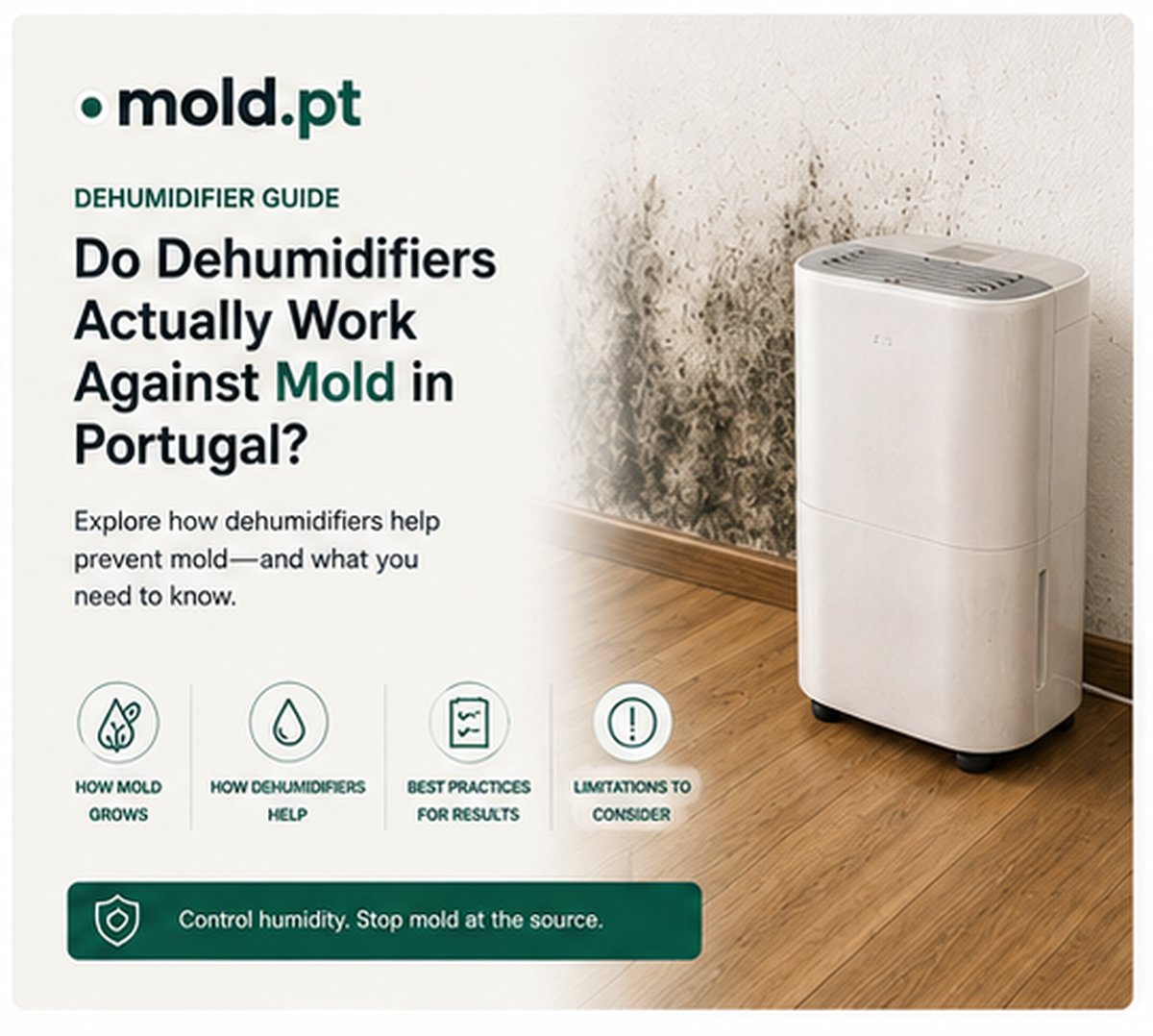
How Does a Dehumidifier Actually Limit Mold Growth?
Mold spores are present in almost all indoor air; what determines whether they take hold is the combination of moisture, temperature, and time. Sustained relative humidity above roughly 65% gives spores what they need to germinate on an organic or dust-coated surface. A dehumidifier interrupts that specific condition, it doesn't sterilise a room, but it can keep the air dry enough that new colonisation is much less likely.
That's a genuinely useful mechanism, and it's why dehumidifiers are a standard recommendation in humidity-prone rooms. The limitation is what it doesn't do: it treats the air in the room it's placed in, not the wall cavity, the roof void, or the plumbing behind a bathroom tile where an actual leak might be sitting.
Where Do Dehumidifiers Genuinely Help?
- Bedrooms and living rooms with noticeable window condensation but no visible structural damp
- Rooms used for drying laundry indoors, which adds significant humidity in a short period
- Pre-1990s apartments without mechanical extraction, as a stopgap while a ventilation retrofit is planned or budgeted
- Basements or ground-floor rooms with elevated ambient humidity but no active water ingress
In these situations, a dehumidifier is treating a real, air-based humidity problem, and it works because the moisture it's removing is genuinely airborne, not coming from inside a wall.
Where Do Dehumidifiers Fall Short?
- Rising damp (humidade ascensional), moisture drawn up through masonry from ground contact, sits inside the wall structure, not the room air a dehumidifier processes
- An active leak keeps adding moisture faster than any dehumidifier can remove it, and the water damage continues regardless of the reading on the unit's display
- Mold already growing on a surface needs to be physically cleaned or remediated; a dehumidifier can help prevent it from returning after that's done, but does nothing to the existing colony
Running a dehumidifier but the mold keeps coming back?
That's often a sign the real source isn't airborne humidity. mold.pt's diagnostic identifies what's actually driving it.
How Do You Size and Run One Correctly?
Manufacturer capacity ratings, typically listed in litres per day, are measured under specific lab conditions and don't always translate directly to a real Portuguese apartment in winter. A unit rated for a small bedroom may struggle in an open-plan space with a kitchen and drying laundry adding humidity continuously. The practical test is whether a hygrometer in the room actually shows relative humidity holding below the target, not the rating on the box.
A unit with a continuous drain option removes the risk of a full tank silently stopping extraction overnight, which matters most in rooms where humidity climbs quickly, like a bathroom or a laundry area.
Dehumidifier vs. Fixing the Actual Cause: What's Cheaper Long-Term?
For a property with a real, fixable ventilation gap, a bathroom or kitchen with no extraction fan, a dehumidifier is treating a problem that has a cheaper permanent solution. Running a unit continuously for years costs more in electricity over time than a single ventilation retrofit would have, on top of the ongoing inconvenience of managing tank drainage and unit maintenance.
Where a dehumidifier makes more sense long-term is a property with genuinely limited ventilation options, a listed building where extraction retrofits aren't straightforward, or a room used seasonally where a permanent fix isn't worth the investment. See our mold remediation cost guide for how ventilation fixes compare to other remediation costs.
Frequently Asked Questions
Q What size dehumidifier do I need for a Portuguese apartment?
Q Can I run a dehumidifier only in winter?
Q Will a dehumidifier get rid of mold that's already there?
Q Is a dehumidifier cheaper than fixing the ventilation problem?
Q Do dehumidifiers help with rising damp?
Conclusion
A dehumidifier is a genuinely useful tool against one specific cause, airborne condensation from a ventilation gap, and close to useless against rising damp, an active leak, or mold that's already established. The question worth answering before buying one isn't whether dehumidifiers work in general, it's whether your specific problem is the kind they're built to solve. A diagnostic tells you that in an hour; running a unit for a season and hoping tells you eventually, at a higher cost either way.
Not sure if a dehumidifier will actually fix your situation?
mold.pt diagnoses the actual cause with moisture mapping before you spend on equipment or remediation. Inspect. Test. Remediate. Verify.