
These photos come from a real ceiling in a Portuguese apartment, not a stock illustration. Nobody had patched a roof or fixed a leak here; the growth built up over time from humidity that had nowhere to go. Below is the full set, followed by a plain read of what the pattern shows and doesn't show before any testing happens.
Click any photo to enlarge. Each one shows a different section or distance, but it's all the same colonisation.
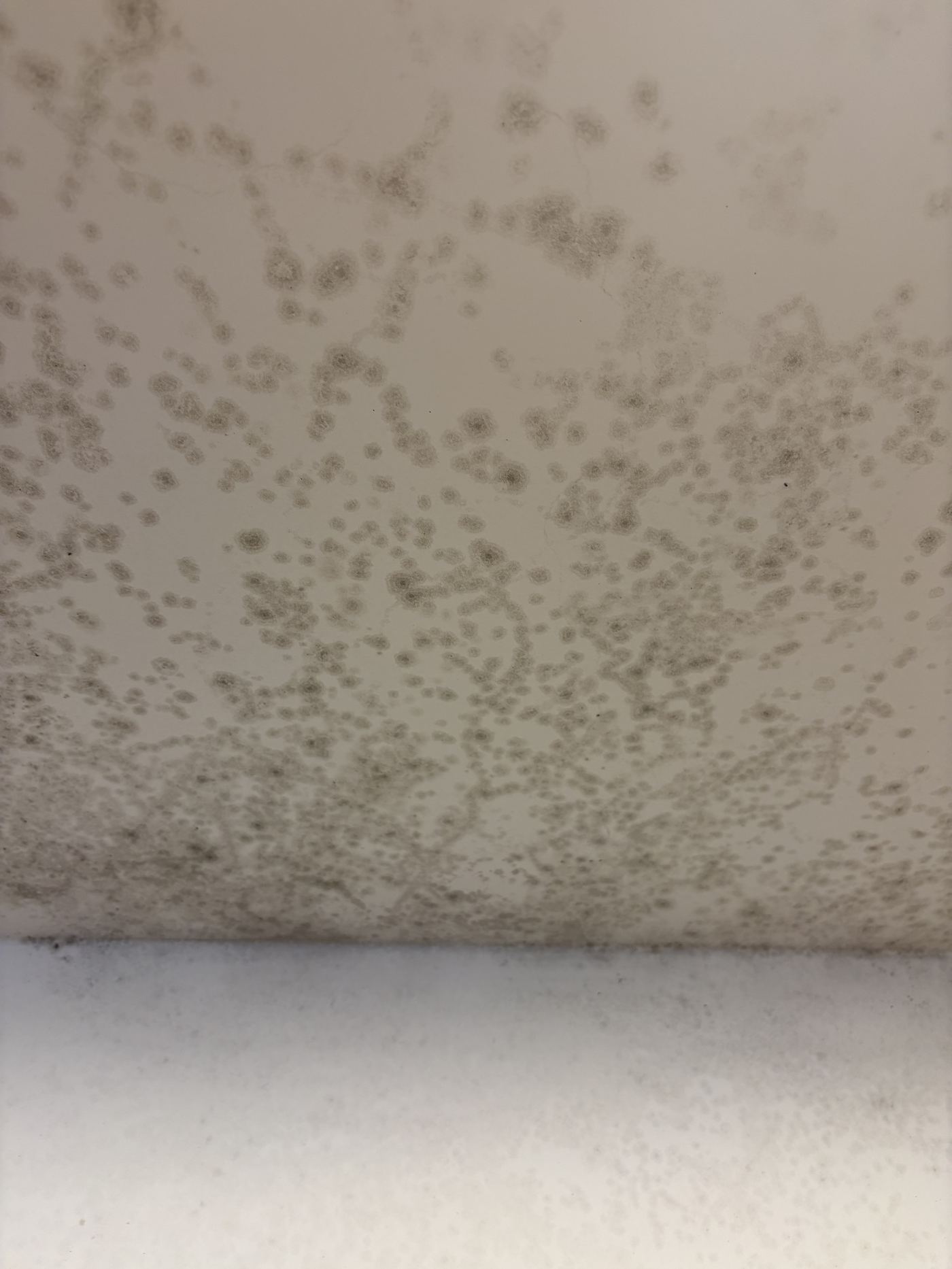
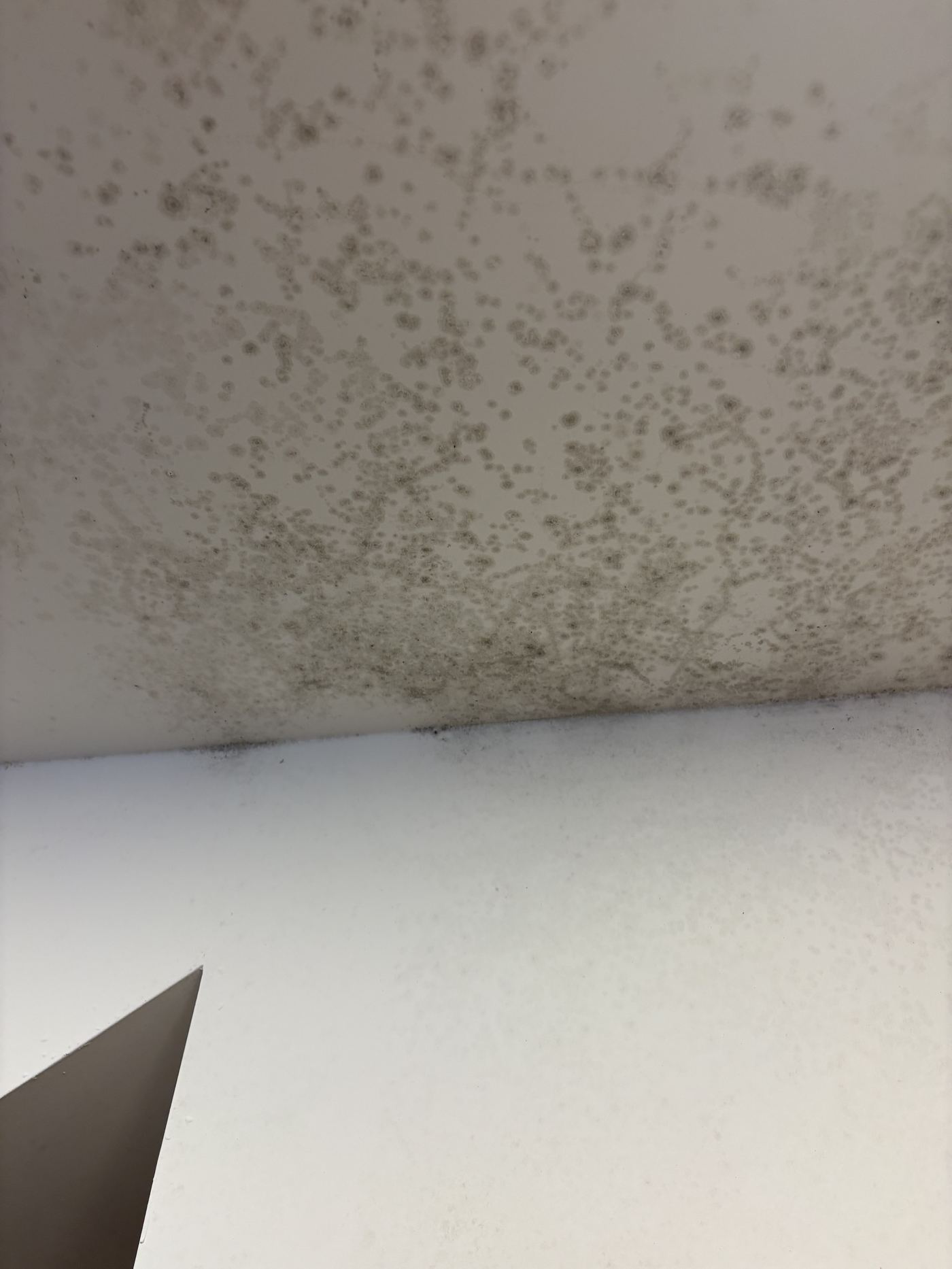
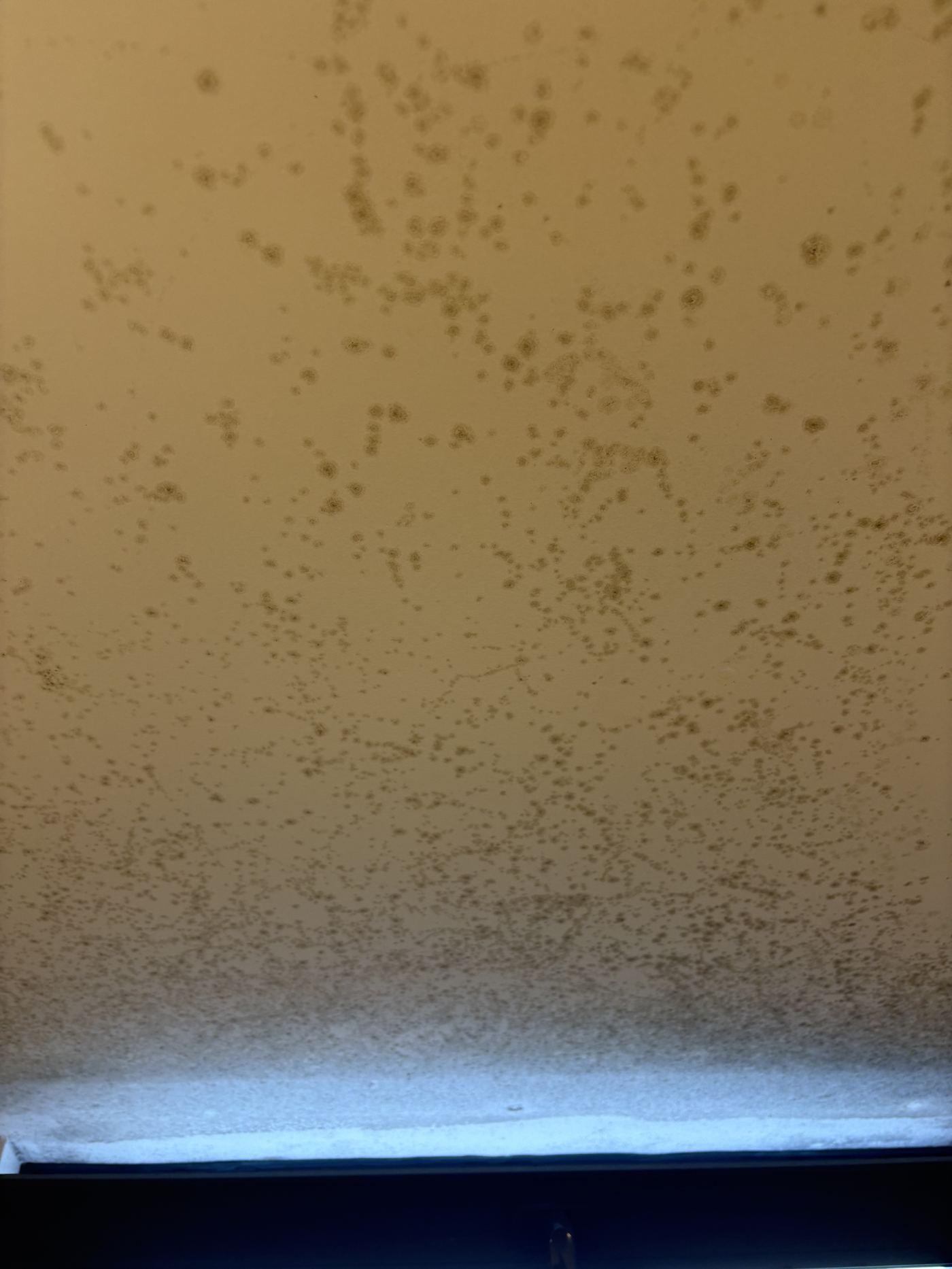
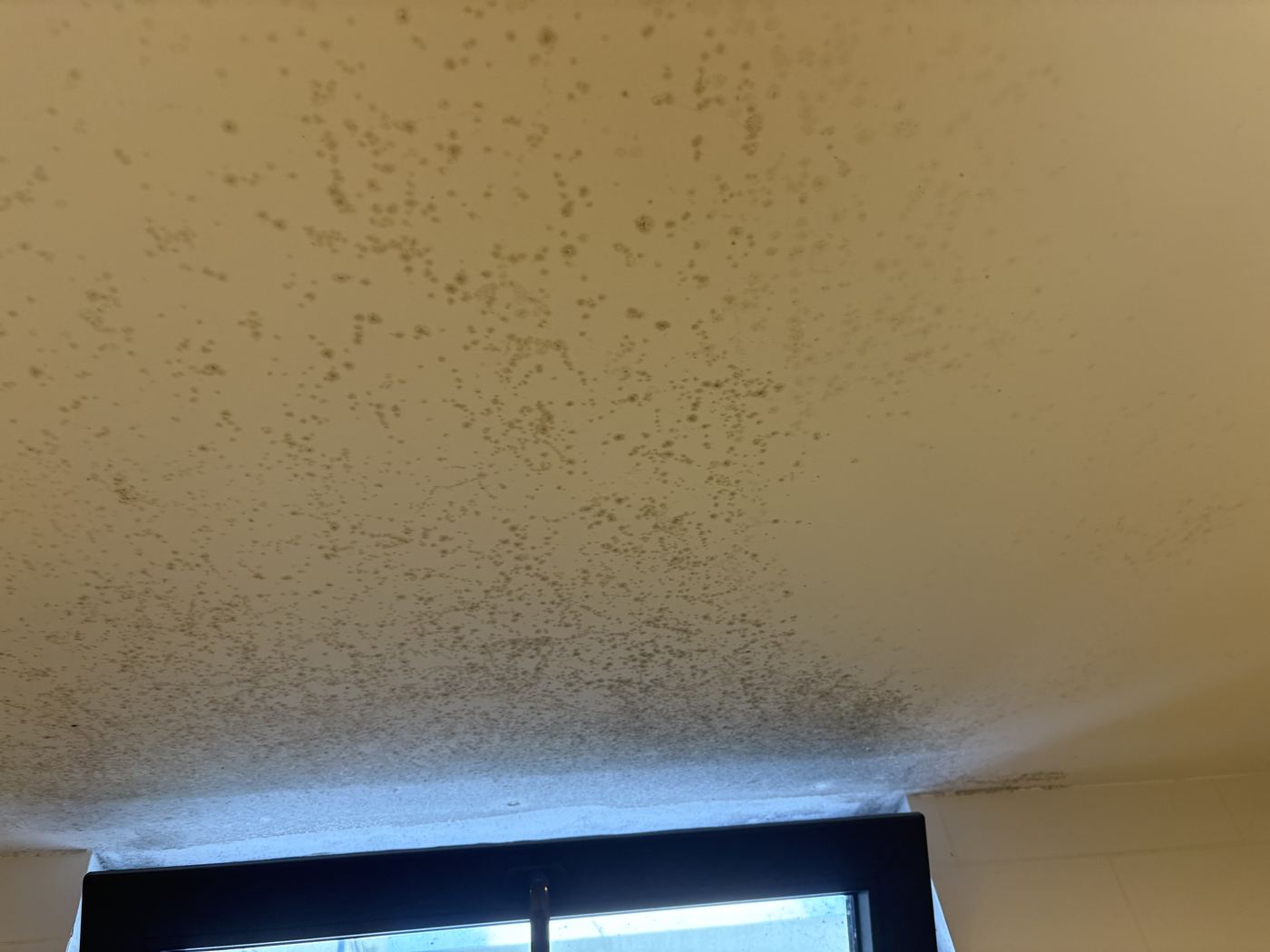
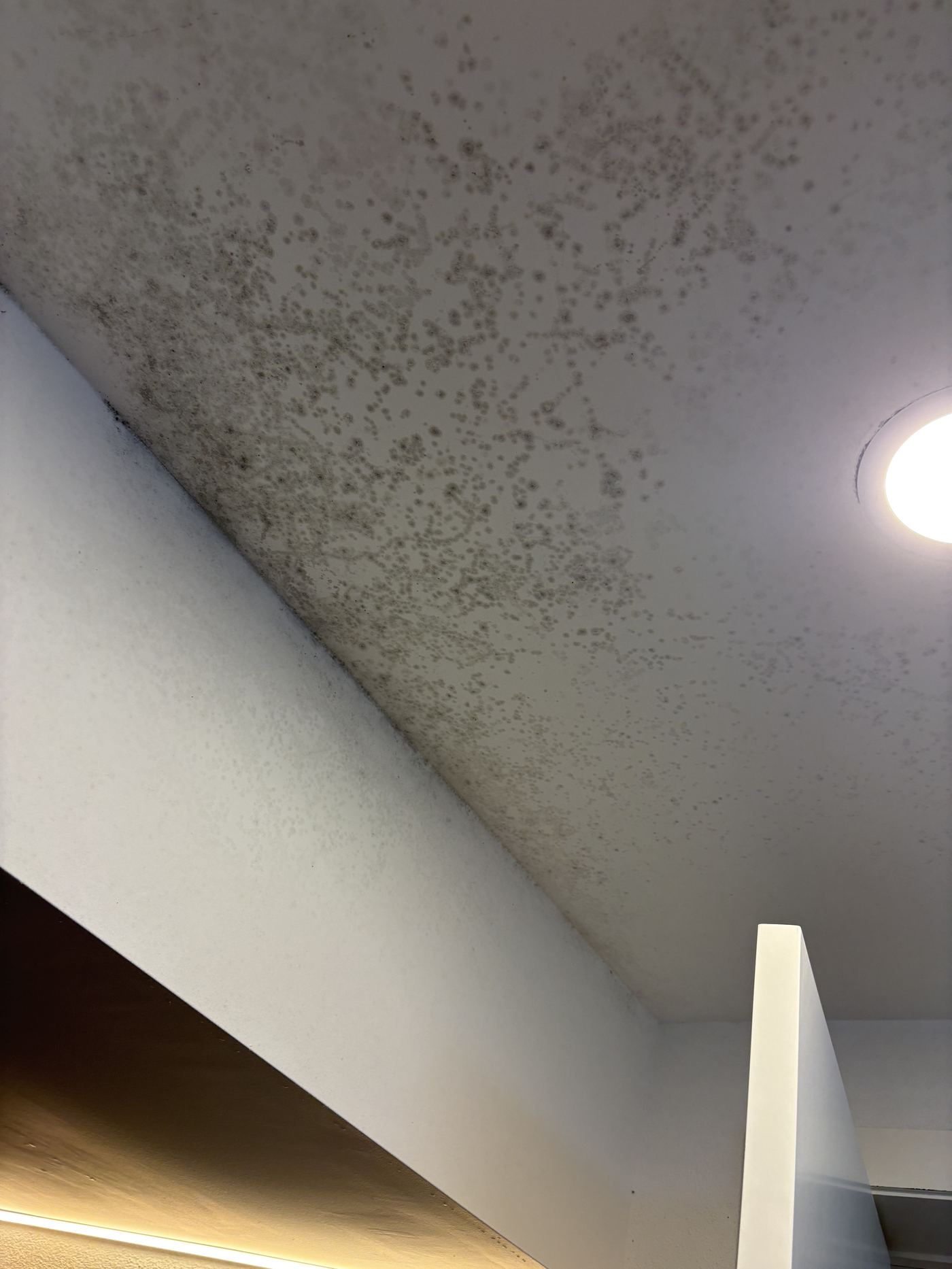
Three things stand out from the images alone. None of them replace a real inspection, but they narrow down what's likely going on.
The growth is spread across a wide area in speckled clusters rather than radiating from one point. That spread points to airborne humidity condensing broadly, not a single leak tracking water from one entry.
The heaviest colonisation sits at the window head and the ceiling-wall corner, the two coldest, least ventilated surfaces in most rooms and the first places condensation forms.
Colonies at this density and coverage take sustained humidity over an extended period to establish. A one-off spike, a party, a bad storm week, doesn't produce this pattern on its own.
The two causes look different once you know what to check.
Wide, speckled, diffuse coverage concentrated at cold surfaces and corners. No single dark ring or streak pointing back to one source.
A localised stain, often ring-shaped or streaked, radiating outward from one point such as a pipe joint, roof flashing, or window seal. Usually darker at the centre and fading outward.
DGS guidance links poor indoor air quality, including excess humidity and mould, to aggravation of pre-existing respiratory conditions and allergies, particularly for people with chronic respiratory disease, cardiovascular disease, allergies, children, and the elderly. That's a general, attributed association, not a verdict on this specific case, and the right response is diagnosis and remediation, not alarm. The World Health Organization's guidelines on dampness and mould draw the same association internationally.
Bleach and paint address what's visible, not the humidity feeding it. Without correcting ventilation or the cold spot causing condensation, colonisation like this typically returns within weeks to months.
The pattern is the tell. A leak produces a localised, often ring-shaped stain radiating from one entry point. This coverage is diffuse and speckled across a wide area, consistent with airborne moisture condensing on a cold surface rather than water tracking in from one spot. A moisture meter reading confirms it either way.
A general cleaner treats the surface. mold.pt starts with moisture mapping to confirm the cause, then remediates and re-tests to confirm the spore count has returned to baseline before calling it resolved.
Get the actual cause confirmed with moisture mapping and testing, rather than guessing from photos.
Request an Inspection