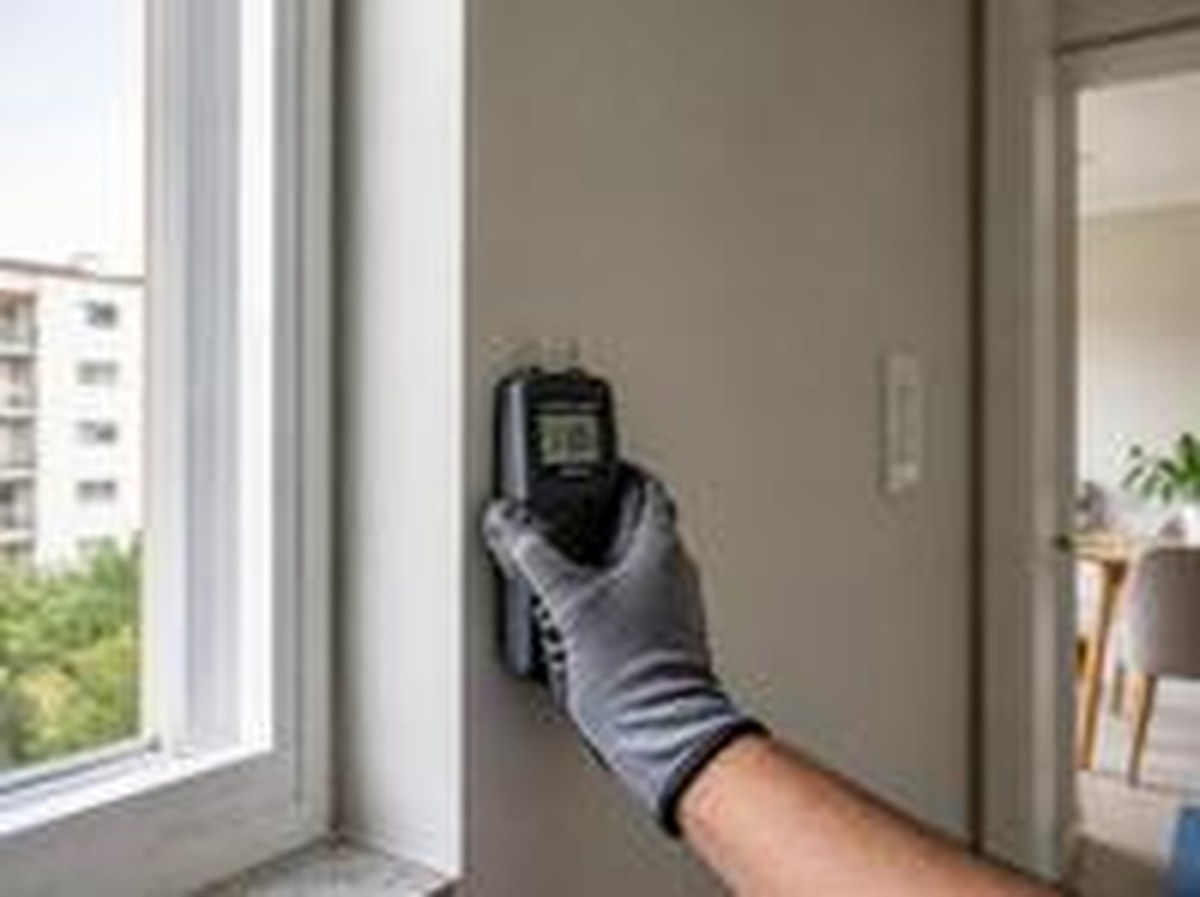
If mold keeps returning after cleaning, moisture is still reaching the surface or affected material has not been adequately dealt with. Condensation, rainwater penetration, a plumbing leak and rising damp need different repairs. Track where and when the patch returns, record indoor humidity, and identify the water source before repainting or trying another cleaner.
29%of people in Portugal live in a home with damp, leaks or rotEurostat, 2023
<60%indoor relative humidity recommended, ideally 30 to 50%EPA
0.9 m²area above which the EPA points to its detailed remediation guidanceEPA
€695mold.pt inspection with species testing when needed, VAT includedmold.pt
Cleaning may remove visible growth without drying the wall or fixing a cold surface, leak or façade defect. In a Portuguese home, a dark corner in winter and a ceiling patch after rain can look similar but call for different work. The location and timing of the stain are more informative than its colour.
§
DGS · EPA
Portugal's health authority, the Direção-Geral da Saúde (DGS), notes that excess indoor humidity can cause condensation on cold surfaces and encourage mold. The EPA advises cleaning mold and eliminating its moisture source. DGS: Indoor airEPA: Mold
Why does mold return? Cause, clue, test and remedy
Short answer
Mold returns because a moisture source remains. Condensation, rainwater penetration, plumbing leaks, rising damp and still-wet material each leave different clues and need different repairs.
Possible cause
Typical clue
Useful check
Appropriate remedy
Condensation / thermal bridge
Spots at cold corners, windows or behind furniture, often worse in winter
Log indoor temperature and relative humidity; assess ventilation and surface temperature; thermal inspection where appropriate
Manage indoor moisture and address ventilation, heating or insulation as the diagnosis requires; clean or replace affected material
Rainwater penetration
A localised patch that darkens or spreads after rain, often on an external wall or ceiling
Photograph before and after rain; inspect roof, façade and joints; map moisture
Repair the entry point, dry materials, then remediate mold
Plumbing or drainage leak
A patch near a bathroom, kitchen or pipe route that may change without rainfall
Compare with water use; arrange leak detection and moisture readings
Fix the leak, dry cavities and assess porous materials
Rising damp
Persistent low-level moisture, damaged plaster or salt deposits on a ground-floor wall
Inspect the wall and ground contact; obtain a professional moisture profile and assess salts
Confirm the water source before selecting a treatment; repair finishes after moisture is controlled
Material remains wet or affected
Staining or musty odour persists in the same material after cleaning
Assess porosity, concealed moisture and the extent of damage
Dry thoroughly; remove and replace materials that cannot be effectively cleaned
i
Clue, not diagnosis
The pattern is a clue, not a diagnosis. A wall can have both condensation and water penetration. A room hygrometer measures humidity in the air, not moisture inside the wall.
Photo guide: patterns worth documenting
Short answer
Photographs of where and when mold appears help a specialist narrow the cause, but a photo alone never confirms condensation, a leak or rising damp.
Use original, permissioned photographs with a location, date and precise caption. Do not label a pictured cause as confirmed unless an inspection established it.
PHOTO TO ADDmold-upper-corner-condensation-portugal-2026.webp
1. Cold upper corner
Scattered spots where an external wall meets a ceiling.
Compatible with condensation; confirm surface temperature and ventilation.
PHOTO TO ADDmold-behind-wardrobe-external-wall-portugal-2026.webp
2. Behind a wardrobe
Growth on an external wall screened by furniture.
Restricted airflow can contribute to condensation; also check for water penetration.
PHOTO TO ADDmold-ceiling-patch-after-rain-portugal-2026.webp
3. Ceiling after rain
A patch photographed in the same frame before and after rainfall.
Timing warrants an inspection of the roof and façade.
PHOTO TO ADDmold-wall-base-salts-portugal-2026.webp
4. Base of a ground-floor wall
Damaged plaster with pale deposits.
Low-level moisture and salts require investigation; a photo alone cannot confirm rising damp.
A 48-hour log of photos, indoor humidity, temperature and rainfall shows whether a patch follows indoor moisture, rain or water use.
⚠
Act now
Do not delay action for 48 hours if there is an active leak, water near electricity or extensive damage.
The log will make a professional assessment more useful.
1At the start
Photograph the whole area and a close-up with an object for scale. Discreetly mark the edge and date. Note the room, height, odour, previous cleaning and recent work.
2Morning and evening, two days
Record air temperature and relative humidity with a hygrometer in the same place. Note window opening, heating, showers, cooking, indoor laundry and dehumidifier use.
3During and after rain
Photograph from the same position and record rainfall, wind and any change. Two dry days cannot rule out a rainwater leak.
4After 48 hours
Compare the timing: does the patch follow indoor moisture, rainfall or water use? Send the photos and notes to the specialist.
The EPA advises keeping indoor relative humidity below 60%, ideally 30 to 50% where possible. A single reading does not establish the cause: a room may have dry air while water is entering a wall. EPA: A Brief Guide to Mold, Moisture and Your Home
What can a homeowner establish without an inspection?
Short answer
Homeowners can document patterns and measure room humidity, but cannot identify mold species, measure moisture inside walls or confirm a cause by sight.
You can
Document where and when the patch appears
Measure humidity and temperature in the room
See whether a patch changes after rain or moisture-producing activities
You generally cannot
Identify a mold species by its colour
Determine the extent inside a cavity
Reliably separate every cause by sight
“Black mold” is a description of appearance, not a species identification.
Species testing is not automatically needed for visible mold. An inspection can begin with the property history, visual findings, moisture readings and an investigation of the water source. Ask why any additional test would change the decision. Thermal imaging also needs interpretation: a cold area in an image does not, by itself, prove concealed water or mold.
Two illustrative Lisbon and Porto scenarios
Short answer
Two illustrative cases show how a Lisbon condensation problem and a Porto rainwater leak would be measured differently. Neither is a real mold.pt inspection.
i
Illustrative
These are examples of how a case could be measured. They are not actual mold.pt inspections or recorded results.
LisbonIllustrative
An upper corner in a bedroom
In a hypothetical Lisbon apartment, mold returns where an external wall meets the bedroom ceiling in winter, without a clear change after rain. The occupant keeps a 48-hour record of air temperature and relative humidity, with repeat photos before and after airing the room. At an inspection, a specialist would measure surface temperature and wall moisture at several points, compare unaffected areas and assess ventilation. If measurements confirmed a cold surface and condensation, the plan would address indoor moisture, ventilation and any relevant thermal bridge, alongside safe treatment of affected material.
Likely pathway: condensation
Evidence needed for a real case: date, approximate district, building period, time-stamped readings and units, instrument, weather, permissioned photos, confirmed cause, intervention and follow-up result.
PortoIllustrative
A ceiling patch after rain
In a hypothetical Porto property, a ceiling stain returns after rainy periods despite repeated painting. The occupant photographs the same area before and after rain and records dates. A specialist would compare moisture readings on the patch with reference areas, examine accessible roof or façade elements and investigate alternative water sources. If water entry were confirmed, the sequence would be to repair it, dry the structure, assess damaged material and only then finish the surface.
Likely pathway: rainwater penetration
Evidence needed for a real case: the same records, including the verified entry point, repeat measurements and a post-repair check.
When should you book an inspection?
Short answer
Book an inspection when mold returns after cleaning, a smell persists, a patch grows, plaster deteriorates, a leak is suspected or you are buying.
Mold returns after cleaning
A musty smell persists without a visible source
The patch grows or plaster deteriorates
You suspect a leak or rainwater penetration
You are buying a home with signs of damp
Seek professional help for extensive growth, damaged porous materials or issues involving ventilation and air-conditioning systems. The EPA cites roughly 10 square feet (0.9 m²) as a point above which its more detailed remediation guidance should be consulted; it is not a universal guarantee that every smaller patch is safe to tackle yourself. EPA: Mold Cleanup in Your Home
§
Health
If someone has asthma, allergies or respiratory symptoms, seek health advice. The World Health Organization associates damp or moldy buildings with increased respiratory symptoms, allergies and asthma; a property inspection does not replace medical assessment. WHO: Dampness and Mould
Frequently asked questions
QWhy does mold return days after I clean it?
The surface or underlying material may still be wet, or condensation may recur. The number of days alone does not identify the cause. Record where and when it returns and investigate the moisture source.
QWill a dehumidifier stop recurring mold?
It can reduce air humidity and help with condensation. It will not repair a plumbing leak, rainwater penetration or water rising from the ground. Persistent recurrence warrants investigation.
QCan I paint over the area once it looks clean?
First correct the moisture source and allow the material to dry. Painting over mold or a damp wall can conceal the problem without solving it. EPA: A Brief Guide
QHow do I tell condensation from a leak?
Condensation often follows cold surfaces and indoor moisture production; penetration can follow rainfall or a specific entry point. These are clues rather than a conclusive test, and both can affect the same home.
QDoes mold.pt offer inspections in Lisbon and Porto?